
Head lice are tiny insects that live on the skin covering the top of your head (scalp). Head lice may also be found in the eyebrows and eyelashes. Lice spread by close contact with other people.
Both over-the-counter and prescription medications are available to treat head lice in your hair (infestation).
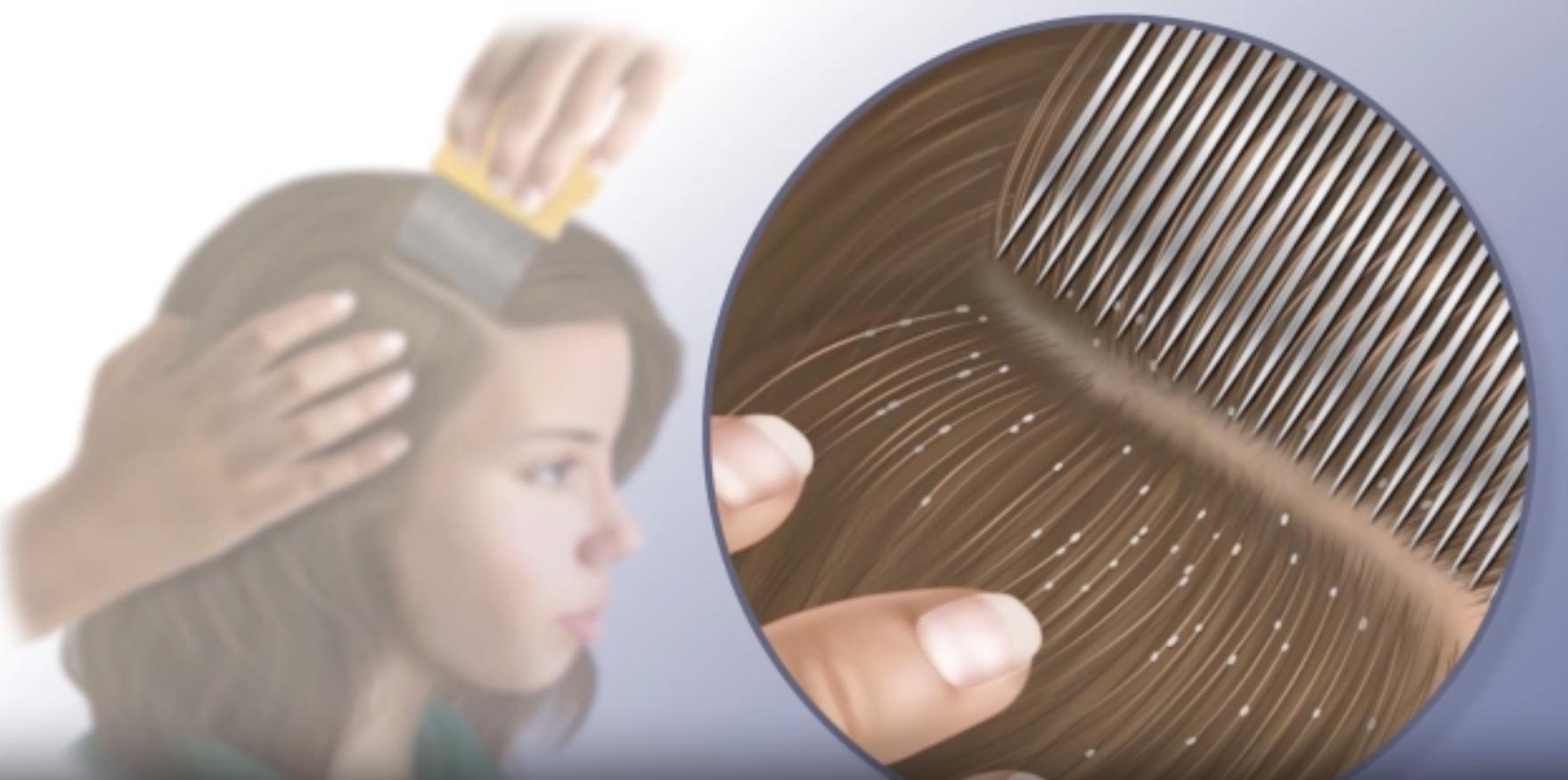
Head Lice
Learn more about how to detect and control an infestation.
DOH Rule Revision
In June of 2023, the Department has restarted the rule revision process again for Chapter 64E-12, of the Florida Administrative Code.
A notice of development of rulemaking was advertised in the Florida Administrative Register. All written comments must have been received by August 31, 2023. Please send comments to FacilityProgramTasks@FLHealth.gov.
Transmission
The most common way to get head lice is by head-to-head contact with a person who already has head lice. This contact can be common among children playing at places like school or the home.
Head lice move by crawling; they cannot hop or fly. Adult lice can live on a person’s head for about 30 days. However, they will die within two days if they fall off a person and cannot feed. Adult female head lice are usually larger than males and can lay about six eggs each day.
Nits (lice eggs) cannot hatch and usually die within a week if they are not kept at the same temperature as those found close to the scalp. Nits take about a week (range 6 – 9 days) to hatch into nymphs (young lice). Nymphs look similar to adult lice but are very small (size of a pinhead); they take about seven days to mature into adult lice.
Symptoms
People with head lice may not have symptoms, particularly with a first infestation or when an infestation is light. Itching (pruritus) is the most common symptom of head lice infestation. It is caused by an allergic reaction to louse bites. It may take 4-6 weeks for itching to appear the first time a person has head lice.
Other symptoms may include the following:
- A tickling feeling or a sensation of something moving in the hair
- Irritability and sleeplessness
- Sores on the head caused by scratching, which can sometimes become infected with bacteria normally found on your skin
Head lice do not transmit any disease and therefore are not considered a health hazard.
Prevention
- Avoid head-to-head (hair-to-hair) contact during play and other activities at home, school, and elsewhere (sports activities, playground, slumber parties, camp).
- Do not share clothing such as hats, scarves, coats, sports uniforms, hair ribbons, or barrettes.
- Do not share combs, brushes, or towels.
Treatment
You can treat head lice with medications (pediculicides) that are either over-the-counter or by prescription. Some medicines kill lice and eggs; retreatment is usually not required for these. Other medicines kill lice but are not effective at killing eggs and so retreatment is recommended. In addition to medications, you can use extra measures to manage lice, but these are usually not necessary.
Medications are generally safe and effective when used correctly. Some medications may cause itching or a mild burning sensation. Use all medications as directed.
Consult your health care provider before treating young children.