Drug addiction, also called substance use disorder, is a disease that affects a person’s brain and behavior and leads to an inability to control the use of a legal or illegal drug or medicine.
Substances such as alcohol, marijuana and nicotine also are considered drugs. When you’re addicted, you may continue using the drug despite the harm it causes.
Drug addiction can start with experimental use of a recreational drug in social situations. The risk of addiction and how fast you become addicted varies by drug.
Some drugs, such as opioid painkillers, have a higher risk and cause addiction more quickly than others.
The Florida Department of Children and Families’ Substance Abuse and Mental Health Program is responsible for the oversight of a Florida’s system of care for the prevention, treatment, and recovery of children and adults with substance use disorders.
Risk Factors
People of any age, sex or economic status can become addicted to a drug. Certain factors can affect the likelihood and speed of developing an addiction:
- Family history of addiction. Drug addiction is more common in some families and likely involves an increased risk based on genes. If you have a blood relative, such as a parent or sibling, with alcohol or drug addiction, you’re at greater risk of developing a drug addiction.
- Mental health disorder. If you have a mental health disorder such as depression, attention-deficit/hyperactivity disorder (ADHD) or post-traumatic stress disorder, you’re more likely to become addicted to drugs. Using drugs can become a way of coping with painful feelings, such as anxiety, depression and loneliness, and can make these problems even worse.
- Peer pressure. Peer pressure is a strong factor in starting to use and misuse drugs, particularly for young people.
- Lack of family involvement. Difficult family situations or lack of a bond with your parents or siblings may increase the risk of addiction, as can a lack of parental supervision.
- Early use. Using drugs at an early age can cause changes in the developing brain and increase the likelihood of progressing to drug addiction.
- Taking a highly addictive drug. Some drugs, such as stimulants, cocaine or opioid painkillers, may result in faster development of addiction than other drugs. Smoking or injecting drugs can increase the potential for addiction. Taking drugs considered less addicting — so-called “light drugs” — can start you on a pathway of drug use and addiction.
Symptoms
Drug addiction symptoms or behaviors include, among others:
- Feeling that you have to use the drug regularly — daily or even several times a day
- Having intense urges for the drug that block out any other thoughts
- Over time, needing more of the drug to get the same effect
- Taking larger amounts of the drug over a longer period of time than you intended
- Making certain that you maintain a supply of the drug
- Spending money on the drug, even though you can’t afford it
- Not meeting obligations and work responsibilities, or cutting back on social or recreational activities because of drug use
- Continuing to use the drug, even though you know it’s causing problems in your life or causing you physical or psychological harm
- Doing things to get the drug that you normally wouldn’t do, such as stealing
- Driving or doing other risky activities when you’re under the influence of the drug
- Spending a good deal of time getting the drug, using the drug or recovering from the effects of the drug
- Failing in your attempts to stop using the drug
- Experiencing withdrawal symptoms when you attempt to stop taking the drug
Prevention
The best way to prevent an addiction to a drug is not to take the drug at all. If your health care provider prescribes a drug with the potential for addiction, use care when taking the drug and follow instructions.
Health care providers should prescribe these medicines at safe doses and amounts and monitor their use so that you’re not given too great a dose or for too long a time. If you feel you need to take more than the prescribed dose of a medicine, talk to your health care provider.
Preventing drug misuse in children and teenagers
Take these steps to help prevent drug misuse in your children and teenagers:
- Communicate. Talk to your children about the risks of drug use and misuse.
- Listen. Be a good listener when your children talk about peer pressure and be supportive of their efforts to resist it.
- Set a good example. Don’t misuse alcohol or addictive drugs. Children of parents who misuse drugs are at greater risk of drug addiction.
- Strengthen the bond. Work on your relationship with your children. A strong, stable bond between you and your child will reduce your child’s risk of using or misusing drugs.

The Facts. Your Future.
Too many youth are losing sight of their dreams and goals. Understand the risks of drug and alcohol use. The more you know, the better equipped you will be to make smart choices. Learn more about information and resources available to teens, parents, and educators.
Information for Health Care Providers
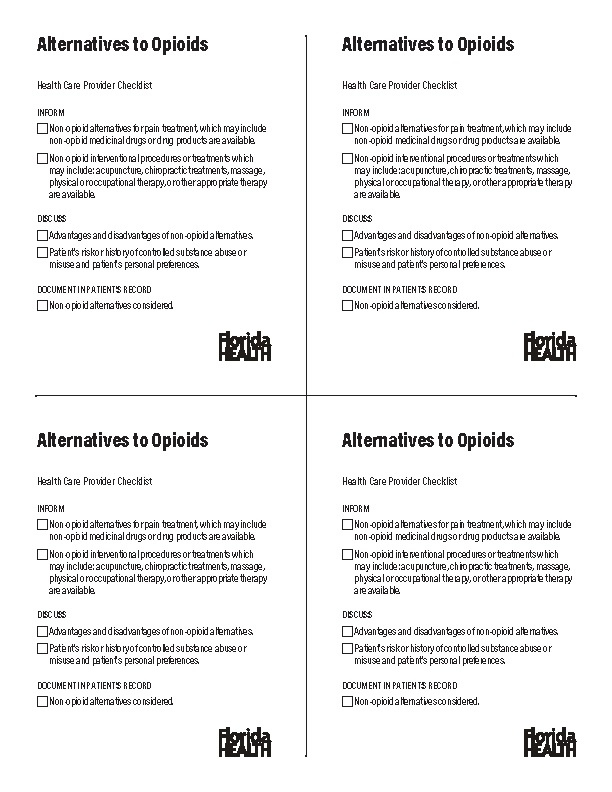
- Inform the patient of available non-opioid alternatives for pain treatment which may include non-opioid medicinal drugs or drug products.
- Inform the patient of available non-opioid interventional procedures or treatments which may include: acupuncture, chiropractic treatments, massage, physical or occupational therapy, or any other appropriate therapy.
- Discuss the advantages and disadvantages of non-opioid alternatives.
- Discuss whether the patient is at high-risk or has a history of controlled substance abuse or misuse, and discuss the patient’s personal preferences.
- Provide the patient with a printed Alternatives to Opioids educational pamphlet.
- Document the non-opioid alternatives considered in the patient’s record.
Before administering anesthesia, prescribing, or ordering a Schedule II controlled substance for pain treatment, a health care provider must talk to the patient about the risks of controlled substance abuse, and the advantages and disadvantages of non-opioid alternatives. The health care provider must provide a copy of the alternatives to opioids, either printed or electronically.
A health care provider is not required to discuss non-opioid alternatives or provide a printed copy of the pamphlet to a patient who is receiving a Schedule II controlled substance for pain treatment before critical care in a hospital or emergency department or when receiving hospice services (section 400.6095, Florida Statutes).
The law applies to non-emergency situations only. Health care providers can post alternatives to opioids on their websites: