Your body breaks down most of the food you eat into sugar (glucose) and releases it into your bloodstream. When your blood sugar goes up, it signals your pancreas to release insulin. Insulin acts like a key to let the blood sugar into your body’s cells for use as energy.
With diabetes, your body doesn’t make enough insulin or can’t use it as well as it should. When there isn’t enough insulin or cells stop responding to insulin, too much blood sugar stays in your bloodstream.
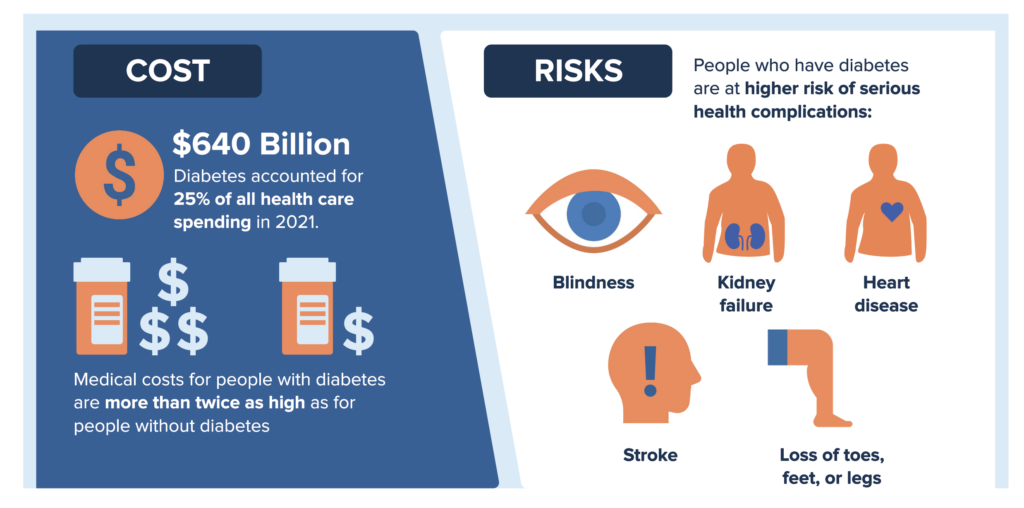
Over time, it can cause serious health issues, such as heart disease, vision loss, and kidney disease.

Diabetes Prevention and management
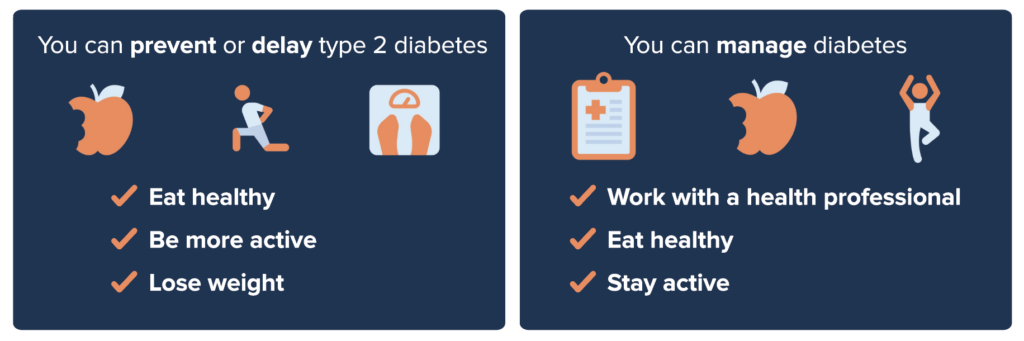
Learn more about the evidence-based programs that can help you make lifestyles changes to prevent or manage diabetes.
Types of Diabetes
Prediabetes
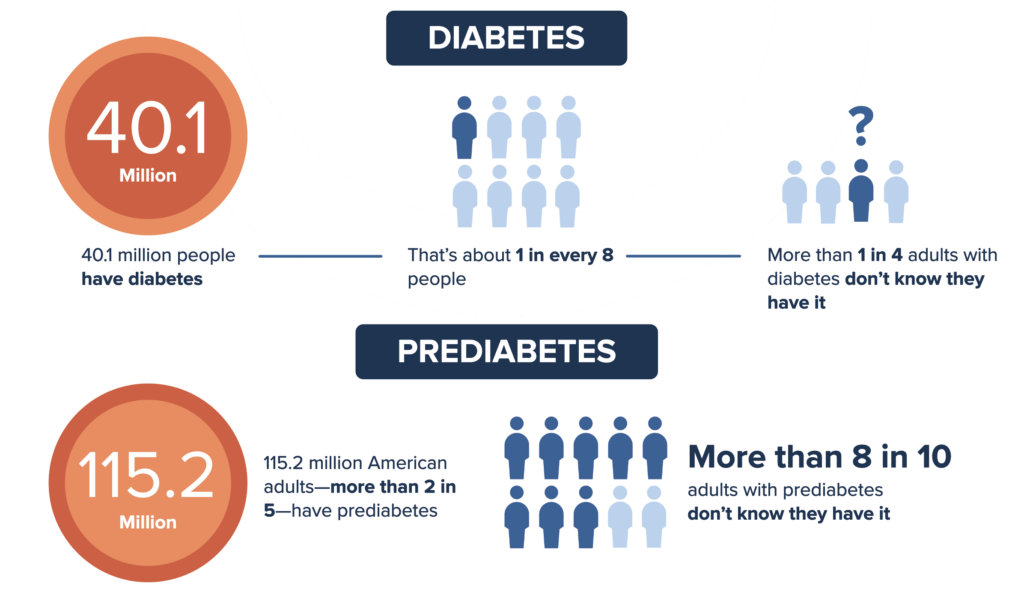
Prediabetes means your blood sugar levels are higher than normal, but not high enough for a diagnosis of diabetes.
Type 1 Diabetes
Commonly diagnosed in children and young adults, and is a lifelong condition. If you have this type of diabetes, you must take insulin every day.
Type 2 Diabetes
The most common form of diabetes, type 2, occurs when your body makes insulin, but the insulin can’t do its job, so glucose is not getting into the cells.
Gestational Diabetes
Caused by a change in the way a woman’s body responds to the hormone insulin during her pregnancy, resulting in elevated levels of blood glucose.