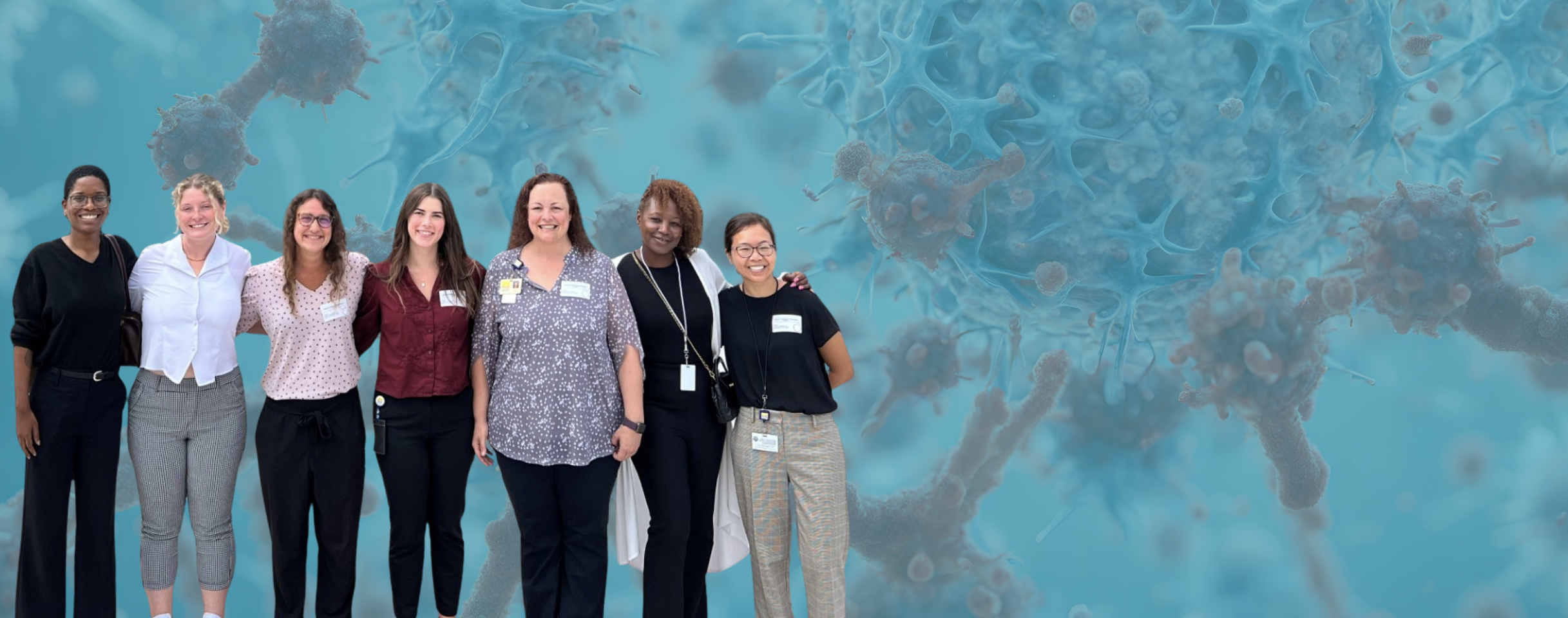
The Florida Epidemic Intelligence Service (EIS) is a unique two-year, post-graduate program of service and on-the-job training for health professionals interested in the field of epidemiology. Fellows are assigned to a county health department (CHD) for two years and have opportunities to respond to various public health concerns throughout the state.
The goals of the program are to provide experience in epidemiology and public health practice during placements with CHD, to assist in outbreak and other field epidemiologic investigations, and to produce well-trained public health epidemiologists for positions in the Florida Department of Health.
Eligibility for EIS Fellowship
- Possess a master’s or doctoral degree in public health (e.g., MPH, MSPH, PhD, or DrPH) or in a similar health-related field
- Preference will be given to those who have completed their degree within five years of the application deadline and those with an epidemiology or a related qualifying degree and coursework completed at an institution accredited by the Council of Education for Public Health.
- Taken at least one course in epidemiology and one course in (bio) statistics during graduate or professional school
- Have a strong interest in applied epidemiology and a commitment to a career in epidemiology in Florida
Goals and Opportunities
- The fellow will participate in a variety of activities designed to develop their competency in three main areas:
- Epidemiology process, data, and analysis
- Communication and community engagement
- Organizational and policy foundations
- Learn about infectious diseases and perform case and outbreak investigations for infectious diseases and other conditions of public health concern.
- The fellow will provide professional and technical epidemiologic consultation and assistance to public and private health care providers for a county health department in Florida.
- Conduct special projects and epidemiological studies and support administrative and management activities
- Perform descriptive and analytic epidemiologic investigations, research, and public health surveillance of disease outbreaks and other field epidemiologic investigations of public health importance, such as disasters.
- Assist with the development, implementation, reporting, and publication of special epidemiological studies in peer-reviewed journals, present at statewide or national professional meetings, and disseminate vital public health information to public health partners and the public.
Eligibility, Application Process, and Documents Needed
Eligiblty for the FL EIS Fellowship
- Possess a master’s or doctoral degree in public health (e.g., MPH, MSPH, PhD, or DrPH) or in a similar health-related field. Preference will be given to those who have completed their degree within five years of the application deadline and those with an epidemiology or a related qualifying degree and coursework completed at an institution accredited by the Council of Education for Public Health.
- Completed at least one course in epidemiology and one course in (bio) statistics during graduate or professional school
- Have a strong interest in applied epidemiology and a commitment to a career in epidemiology in Florida
U.S. citizens and lawfully authorized alien workers are eligible to apply. The FL EIS Program is unable to provide VISA sponsorship.
Application Materials
All the items listed below must be submitted to the FL EIS Program during the application period and will not be considered outside of the application period.
- Application: Complete the Florida Department of Health Job Application once the position is posted.
- Curriculum Vitae (CV): Please note this is more than just a standard resume and should include additional details such as research, publications, professional presentations, awards, and other relevant academic history along with the standard resume sections.
- References: Provide the name, title, agency of employment, email address, and direct phone number of three professional references.
- Personal Statement: A narrative, no longer than two pages, which addresses the following questions:
- What are your career plans after graduating from the FL EIS Program? Why?
- How will the FL EIS Program help you fulfill these plans?
- How will the FL EIS Program complement your previous training and experience?
- Is there any aspect of public health that is particularly interesting to you? Why?
- Transcripts: Submit transcripts from the school from which you received your highest degree and for any school from which you received public health training (e.g., MPH, MSPH, DrPH, PhD). Copies of your official transcripts are acceptable during the application process. An unofficial printout from the student system is not acceptable. If chosen for the fellowship, official sealed transcripts must be provided.
- For Foreign Schools: If transcripts are not issued by a U.S. institution, proof of degree completion must be submitted and accompanied by a credential verification document. This may be accomplished by submitting coursework documents to a private organization that specializes in interpretation of foreign educational credentials. This evaluation must include evaluation of coursework and verification of the degree. A list of private organizations is available from the National Association of Credential Evaluation Services.
Current Fellows
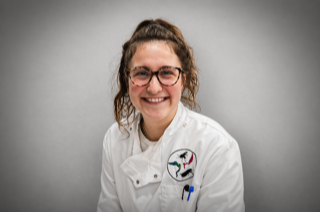
Rebecca MarIno
Home State: Ohio
Graduate Degree: University of Notre Dame, MSGH
Undergraduate Degree: University of Notre Dame, BS Pre-Professional Studies, and Classics
Assignment: Florida Department of Health in St. Lucie County
Mentors: Caitlin Farkas and Angela Caglioni Roberson, MSN, RN
I feel that the FL EIS program is the perfect complement to the training that I have received so far. This program would allow me to continue my love of conducting epidemiological investigations and diving deep into data to gain answers. Then, once answers have emerged, you can use the data to enact practical solutions to mitigate the issues.

LeAnn Mcfadden
Home State: Arkansas
Graduate Degree: University of Arkansas for Medical Sciences, MPH Epidemiology concentration
Undergraduate Degree: University of Arkansas at Little Rock, BS in Biology
Assignment: Florida Department of Health in Pasco County
Mentors: Brittany Merens, MPH and Kaila Yeager, MPH
The EIS Program will complement the experience I have already gained as a graduate student, such as scientific/technical writing, epidemiologic investigation, and analytical research. As a fellow, I will assist my county health department and improve the health of Florida residents by investigating public health concerns and responding accordingly.
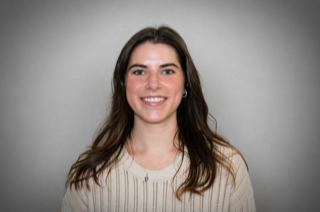
Lindsey Wengenroth
Home State: Colorado
Graduate Degree: Colorado State University, MPH Epidemiology concentration
Undergraduate Degree: Colorado State University, BS Health and Exercise Science, Health Promotion concentration
Assignment: Florida Department of Health in Seminole County
Mentors: Maria Bermudez-Perez, MS, CIC and Ana C. Scuteri, MPH
The FL EIS program will help me fulfill my goals by allowing me to thrive in an environment where I can learn, observe, and train hands on as a field epidemiologist within a public health department. With the Florida EIS fellowship, goals are set to push me to achieve and focus on future ambitions I have set for myself. This program will provide me with in-valuable learning opportunities and help me focus on my future, leading me into an exciting role as a public health professional .
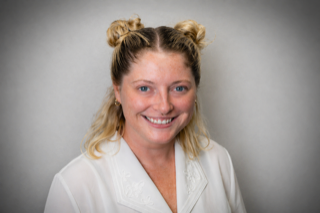
Colleen Kazokas
Home State: New Jersey
Graduate Degree: : Drexel University, MPH
Undergraduate Degree: Gettysburg College, BS Health Sciences
Assignment: Florida Department of Health in Pinellas County
Mentors: Rachel Janssen Ilic, MPH, CPH, CIC and JoAnne Lamb, MPH, RN, CIC
While pursuing my MPH has given me a strong foundation in the technical and academic aspects of epidemiology, the FL EIS program will allow me to further develop my public health skills in a county health department setting. The fellowship will also give me the opportunity to work closely with experienced public health professionals. Mentorship is especially important to me as the first in my family to pursue public health and graduate education. I know how valuable their guidance will be as I continue growing in my early career.
Past Alumni
The Florida EIS Fellowship Program has transformed the landscape of public health practice in Florida. Through rigorous training, real-world fieldwork, and a commitment to service, Florida’s EIS fellows have become trusted leaders in epidemiology. Their work has directly influenced policy, improved outbreak response, and improved health across the state.
The program’s alumni continue to shape public health at local, state, and national levels—demonstrating the enduring value of investing in the next generation of epidemiologists.
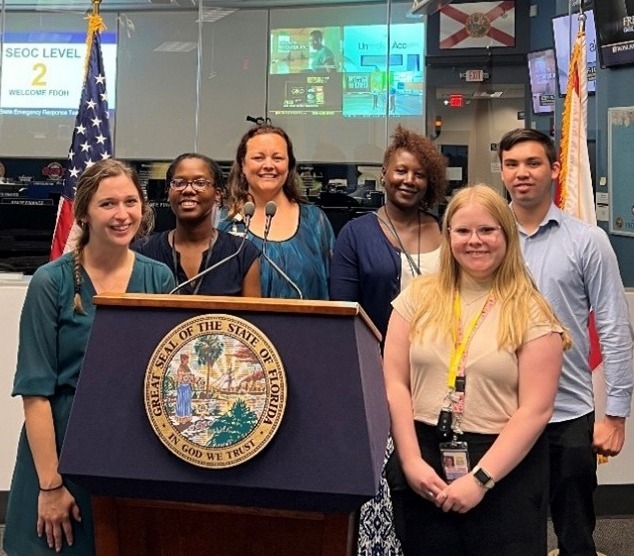
2020-2025
Alexander Condis, Saresa Thomas Ford; Jeremy Adams, Mohammad Alak, Nikki Coble, Adrian Kinkead, Taylor Kwiatkowski, Mark Pagnotto, Parnia Roghani, Richard Santiago Jr., Michelle Slawinski, Alexis Bell, Emily Dougherty (Kostek), Bernie Kloppenburg, and Virginia Warren
2015-2019
Nushrat Alam, Ellen Dugan, Ashley Joseph, Briana O’Sullivan, Danielle Rankin; Erika Cathey, Charlie Clark, Diana Connor, Eboni Crawford, Toni Hudson, and Meri Phillips.
2010-2014
Alazandria Cruze, Michelle George, Ben Klekamp, Jennifer Roth, Vincy Samuel; Amber Barnes, Michael Drennon, Jessica Fung, Pamela Mann, Holly Montejano, Tara Richardson, JoAnne Tellado, and Lea Wansbrough.
2004-2009
Taj Azarian, Paco Castellon, Catherine Kroll, Sericea Smith, Raquel Stephenson; Karen Alelis, Leah Eisenstein, Kimberly Fraser, Rebecca Lazensky, Anita Lewis, Kateesha McConnell, Erin O’Connell; Aaron Kite Powell, Nicole Basta, Sharlene Traynor, Sharlene Emmanuel, Patricia Ragan; Andre Ourso, Aimee Pragle, Dawn Ginzl, Maria Bonafonte, Kelly Grainger, Rodlescia Sneed, Maria Donnelly; Robyn Kay, Matthew Laider, Janet Hamilton, Jose Lojo, Kendra Johnson; David Atrubin, Jerne Shapiro, Edhelene Rico, Meghan Weems, Carmela Mancini, and Michael Lo.
Recent Accomplishments
Research and Scientific Contributions
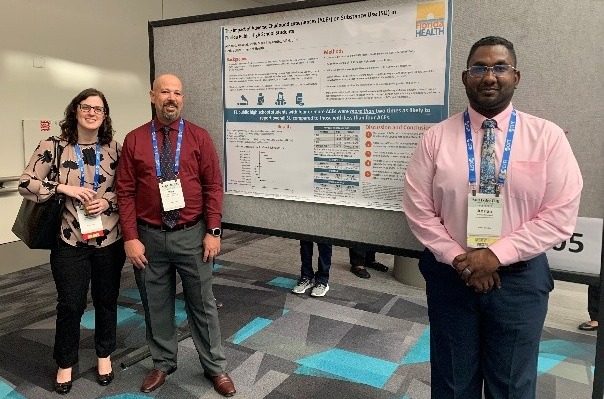
National and State Conference Presentations:
- American Public Health Association (APHA)
- Council of State and Territorial Epidemiologists (CSTE)
- National Association of County and City Health Officials (NACCHO)
- University of Florida Emerging Pathogens Institute Research Day
- Association of State and Territorial Health Officials (ASTHO) Overdose Data to Action
Peer-Reviewed Publications
CDC Morbidity and Mortality Weekly Report (MMWR)
Emerging Infectious Diseases
Infectious Disease Surveillance and Outbreak Response
- West Nile Virus: Delayed mortality analysis
- Oropouche Virus: Travel-associated cases in Florida
- Rabies: Exposure trends during bat maternity season
- Respiratory Syncytial Virus and Norovirus: County-level outbreak investigations
- Foodborne Illness: Holiday buffet and outdoor event outbreaks
Emergency and Hurricane Response Surveillance
- Staffing special needs shelters during and after hurricanes
- Conducting post-hurricane shelter surveillance
- Deploying and assisting with rapid needs assessments after hurricanes
- Investigating carbon monoxide poisoning reports
- Mortality analyses post-hurricane
- Leading and assisting with disease outbreaks after storms
Substance Use and Behavioral Health
- Adverse Childhood Experiences and Substance Use: Impact on Florida high school students
- Opioid Overdose Surveillance: County-level data and interventions
- High-Utilizer Identification: Acute care service usage patterns
Innovative Tools and Data Systems
- ESSENCE-FL: Syndromic surveillance enhancements
- Online Survey tools: Foodborne outbreaks
- Social Network Analysis: Using R for public health insights
- GIS Mapping: Injury and illness surveillance across counties
Training, Education and Knowledge Sharing
Webinars and Workshops:
- Epidemiology Training Tuesdays
- Florida Health GIS Showcases
- CDC and National Syndromic Surveillance Program’s Community of Practice calls and meetings
- Waterborne and Foodborne Disease Workshops
Publication and Guides:
Community and Cross-Sector Collaboration
- Local Partnerships: Behavioral health intervention teams, health care facilities, emergency medical services, animal control, mosquito control
- Local County Health Departments: Cross-county outbreak responses
- National Partnerships: CDC, ASTHO, NACCHO
Impact Snapshot
- 100+ presentations, posters, and webinars
- 25+ peer-reviewed publications and technical briefs
- 35+ counties engaged in surveillance and response
- 75+ fellows trained and mentored