
Lead poisoning occurs when lead builds up in the body, often over months or years. Even small amounts of lead can cause serious health problems.
Children younger than 6 years are especially vulnerable to lead poisoning, which can severely affect mental and physical development. At very high levels, lead poisoning can be fatal.
There is treatment for lead poisoning, but taking some simple precautions can help protect you and your family from lead exposure before harm is done.

Lead Exposure Prevention
Learn how you can help you protect yourself and your family from lead exposure.
Sources of Exposure
Lead is a metal that occurs naturally in the earth’s crust, but human activity — mining, burning fossil fuels and manufacturing — has caused it to become more widespread. Lead was also once used in paint and gasoline and is still used in batteries, solder, pipes, pottery, roofing materials and some cosmetics.
Lead in paint
Lead-based paints for homes, children’s toys and household furniture have been banned in the United States since 1978. But lead-based paint is still on walls and woodwork in many older homes and apartments. Most lead poisoning in children results from eating chips of deteriorating lead-based paint.
Water pipes and imported canned goods
Lead pipes, brass plumbing fixtures and copper pipes soldered with lead can release lead particles into tap water. Lead solder in food cans, banned in the United States, is still used in some countries.
Other sources of lead exposure
Lead sometimes can also be found in:
- Soil. Lead particles from leaded gasoline or paint settle on soil and can last years. Lead-contaminated soil is still a major problem around highways and in some urban settings. Some soil close to walls of older houses contains lead.
- Household dust. Household dust can contain lead from lead paint chips or from contaminated soil brought in from outside.
- Pottery. Glazes found on some ceramics, china and porcelain can contain lead that can leach into food served or stored in the pottery.
- Toys. Lead is sometimes found in toys and other products produced abroad.
- Cosmetics. Tiro, an eye cosmetic from Nigeria, has been linked to lead poisoning. Kohl is another eye makeup that may contain lead.
- Herbal or folk remedies. Lead poisoning has been linked to greta and azarcon, traditional Hispanic medicines, as well as some from India, China and other countries.
- Mexican candy. Tamarind, an ingredient used in some candies made in Mexico, might contain lead.
- Lead bullets. Time spent at firing ranges can lead to exposure.
- Occupations. People are exposed to lead and can bring it home on their clothes when they work in auto repair, mining, pipe fitting, battery manufacturing, painting, construction and certain other fields.
Symptoms
Lead poisoning can be defined as exposure to high levels of lead typically associated with severe health effects. The amount of lead in the body and the tissue as well as the time course of exposure determines the toxicity and the signs and symptoms exhibited by an individual. In regards to the time of exposure, lead poisoning can be classified into acute lead poisoning (from intense exposure of short duration) or chronic lead poisoning (from repeat low-level exposure over a prolonged time period).
Lead poisoning symptoms in children
Signs and symptoms of lead poisoning in children include:
- Developmental delay
- Learning difficulties
- Irritability
- Loss of appetite
- Weight loss
- Sluggishness and fatigue
- Abdominal pain
- Vomiting
- Constipation
- Hearing loss
- Seizures
- Eating things, such as paint chips, that aren’t food (pica)
Lead poisoning symptoms in newborns
Babies exposed to lead before birth might:
- Be born prematurely
- Have lower birth weight
- Have slowed growth
Lead poisoning symptoms in adults
Although children are primarily at risk, lead poisoning is also dangerous for adults. Signs and symptoms in adults might include:
- High blood pressure
- Joint and muscle pain
- Difficulties with memory or concentration
- Headache
- Abdominal pain
- Mood disorders
- Reduced sperm count and abnormal sperm
- Miscarriage, stillbirth or premature birth in pregnant women
Risk Factors
Factors that may increase your risk of lead poisoning include:
- Age. Infants and young children are more likely to be exposed to lead than are older children. They might chew paint that flakes off walls and woodwork, and their hands can be contaminated with lead dust. Young children also absorb lead more easily, and it’s more harmful for them than it is for adults and older children.
- Living in an older home. Although the use of lead-based paints has been banned since the 1970s, older homes and buildings often retain remnants of this paint. People renovating an older home are at even higher risk.
- Certain hobbies. Making stained glass and some jewelry requires the use of lead solder. Refinishing old furniture might put you in contact with layers of lead paint.
- Living in developing countries. Developing countries often have less strict rules regarding exposure to lead than do developed countries. American families who adopt a child from another country might want to have the child’s blood tested for lead poisoning. Immigrant and refugee children also should be tested.
Lead can harm an unborn child. If you’re pregnant or planning a pregnancy, be especially careful to avoid exposure to lead.
Testing
Health care providers usually use a simple blood test to detect lead poisoning. A small blood sample is taken from a finger prick or from a vein. Lead levels in the blood are measured in micrograms per deciliter (µg/dL). An unsafe level is 3.5 µg/dL or higher.
Treatment
The main method of treating lead poisoning is to remove the source of lead and chelation therapy for people with significantly high blood levels or who have symptoms of poisoning.
Chelation therapy is the administration of chelating agents to remove heavy metals from the body. Chelation therapy has a long history of use in clinical toxicology. For the most common forms of heavy metal intoxication—those involving lead, arsenic or mercury, a number of chelating agents are available.
Prevention
Simple measures can help protect you and your family from lead poisoning:
- Wash hands and toys. To help reduce hand-to-mouth transfer of contaminated dust or soil, wash your children’s hands after outdoor play, before eating and at bedtime. Wash their toys regularly.
- Clean dusty surfaces. Clean your floors with a wet mop and wipe furniture, windowsills and other dusty surfaces with a damp cloth.
- Remove shoes before entering the house. This will help keep lead-based soil outside.
- Run cold water. If you have older plumbing containing lead pipes or fittings, run your cold water for at least a minute before using. Don’t use hot tap water to make baby formula or for cooking.
- Prevent children from playing on soil. Provide them with a sandbox that’s covered when not in use. Plant grass or cover bare soil with mulch.
- Eat a healthy diet. Regular meals and good nutrition might help lower lead absorption. Children especially need enough calcium, vitamin C and iron in their diets to help keep lead from being absorbed.
- Keep your home well maintained. If your home has lead-based paint, check regularly for peeling paint and fix problems promptly. Try not to sand, which generates dust particles that contain lead.
County Screening Maps, Data, and Statistics
Florida’s County Screening Maps
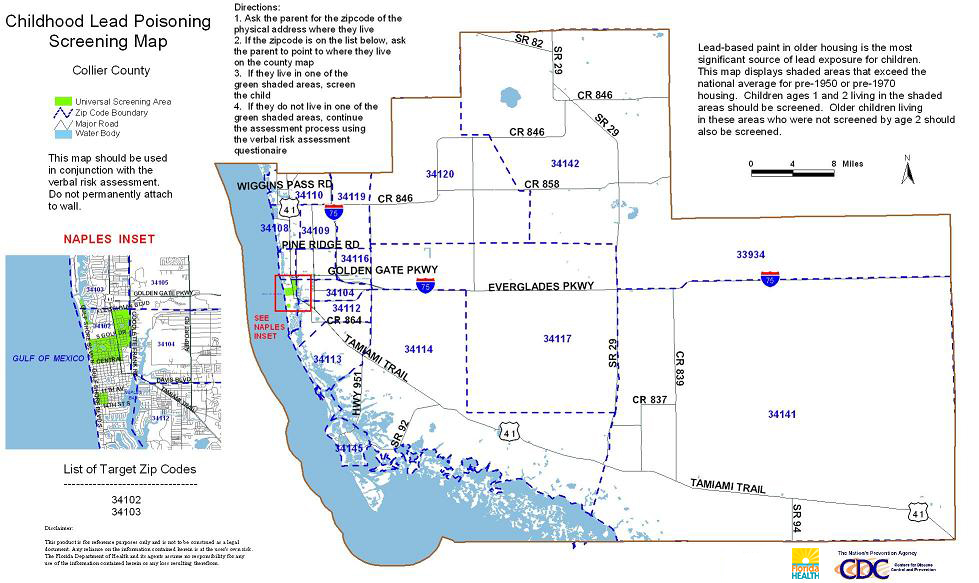
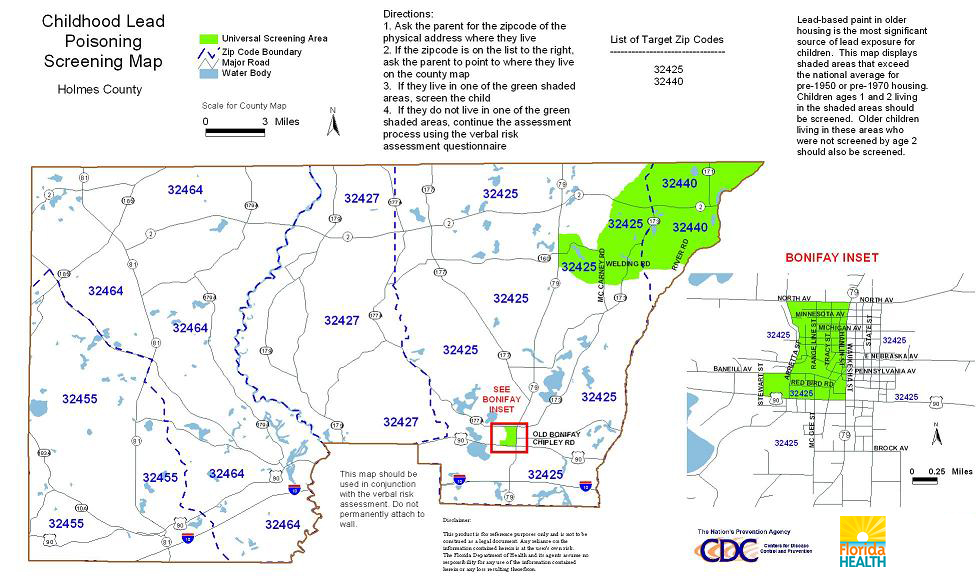
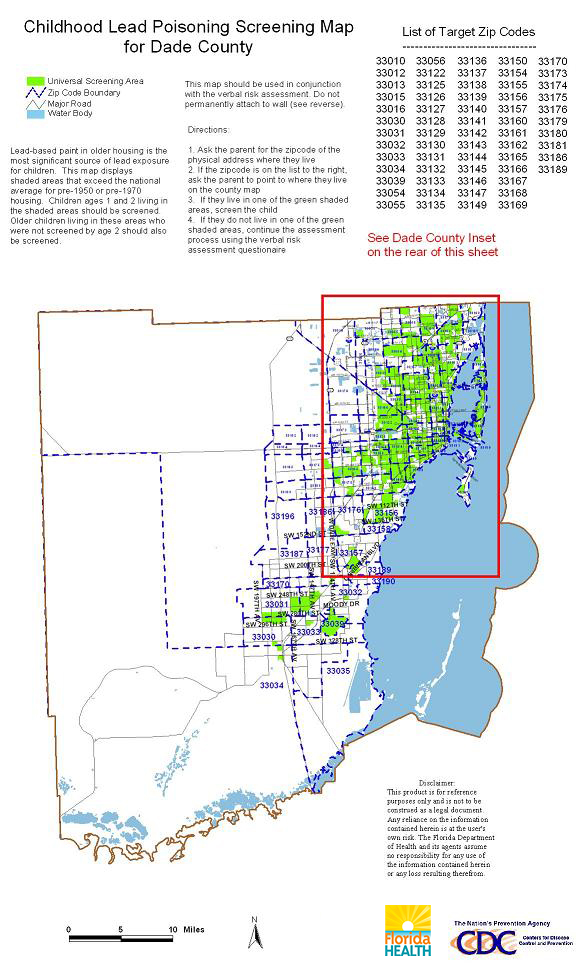
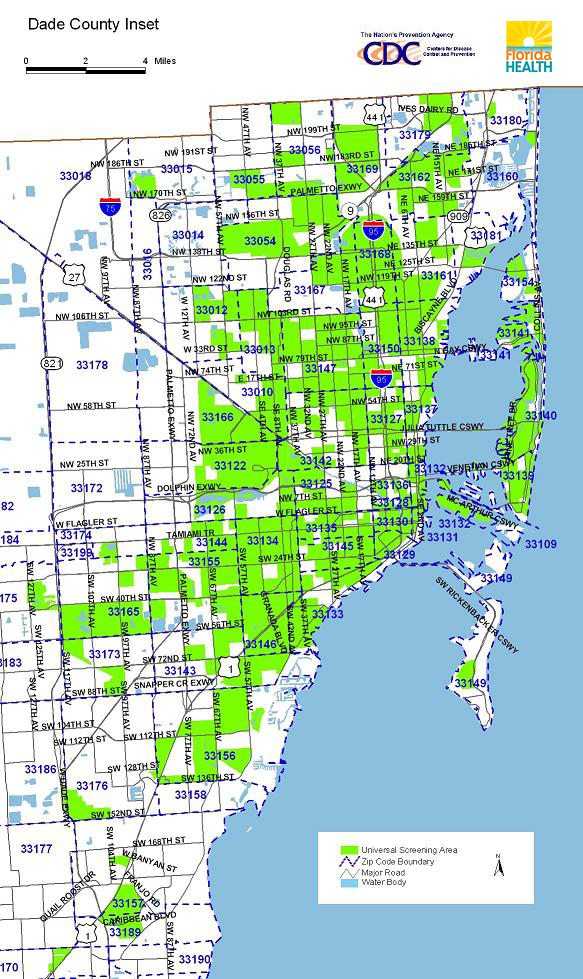
The county maps show the target ZIP codes for blood lead screening among children. The 2nd page for selected maps contains insets for cities/towns.
Alachua
Bay
Bradford
Brevard
Brevard – page 2
Broward
Broward – page 2
Calhoun
Charlotte
Clay
Collier
Columbia
Desoto
Dixie
Duval
Duval – page 2
Escambia
Flagler
Franklin
Gadsden
Gulf
Hamilton
Hardee
Hendry
Hernando
Highlands
Hillsborough
Hillsborough – page 2
Holmes
Indian River
Jackson
Jefferson
Lake
Lake – page 2
Lee
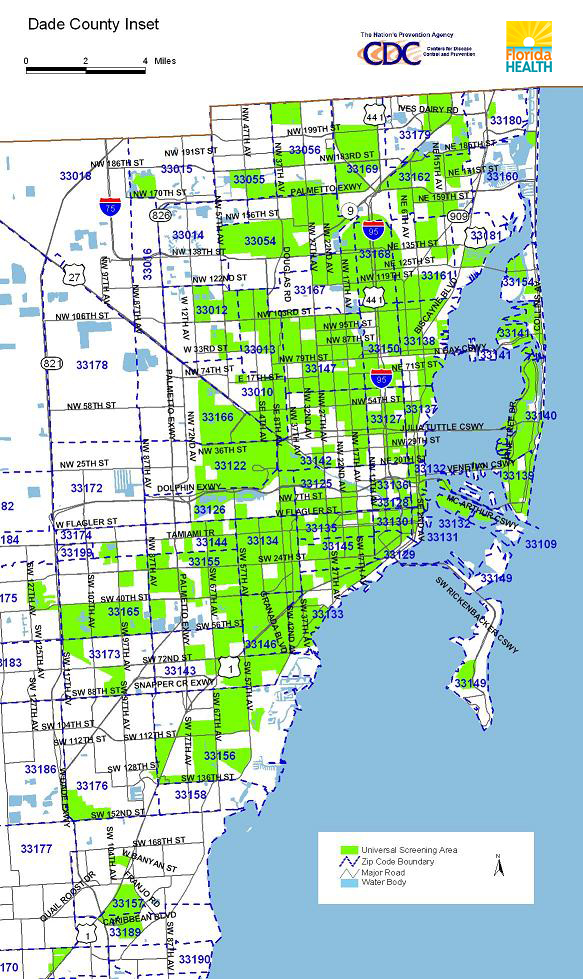
There are eight counties that do not have a screening map: Baker, Citrus, Gilchrist, Glades, Lafayette, Liberty, Union, and Wakulla. This does not mean these counties do not have high-risk areas for lead poisoning. These counties did not have the percentage of older housing that matched the criteria used to create the maps.
There are also a number of important secondary lead exposures for children, including adult “take home” lead. Adults who are exposed to lead at work or during a hobby may inadvertently expose their children. The screening guidelines document contains an example of a risk questionnaire that includes questions designed to capture these exposures.
The Lead Poisoning Prevention Program encourages health care providers to use a risk questionnaire to assist in the decision to screen a child for lead poisoning, especially in counties with no screening map.
surveillance data
CDC compiles state surveillance data for children ages less than 72 months of age who were tested for lead at least once since January 1, 1997.
Information for Health Care Providers
testing for Lead
- Health care providers should follow screening guidelines in Florida’s Childhood Lead Poisoning Screening and Case Management Guide.
- Lead poisoning is most likely to occur among children between the ages of 12 and 36 months. In Florida, Medicaid eligible children are required to be tested at 12 and 24 months of age and between 36 and 72 months if not previously tested.
- Other children should be tested at that same frequency if they have risk factors, see link to guide above.
- Lead testing is not usually part of a routine pediatric check-up. If parents believe that their child may be at risk for lead poisoning, they should ask their provider to test their child’s blood for lead.
reporting Findings
Yes. Reporting of blood lead test results is mandated under Chapter 64D-3,0 Florida Administrative Code.
In addition, ALL blood lead test results greater than or equal to 3.5 µg/dL should be reported to the county health department where the patient resides.
Reportable Condition
The results of ALL blood lead tests are reportable to the Florida Department of Health in an approved electronic format by the end of the next business day following laboratory findings.
follow-up care
- Health care providers should follow lead poisoning case management guidelines in Florida’s Childhood Lead Poisoning Screening and Case Management Guide.
- Health care providers are urged to partner with the caregiver and local county health department to ensure the child is promptly removed from the source to prevent further exposure. The first step in this process is identifying the source of exposure by interviewing the care giver and if needed, environmental testing.