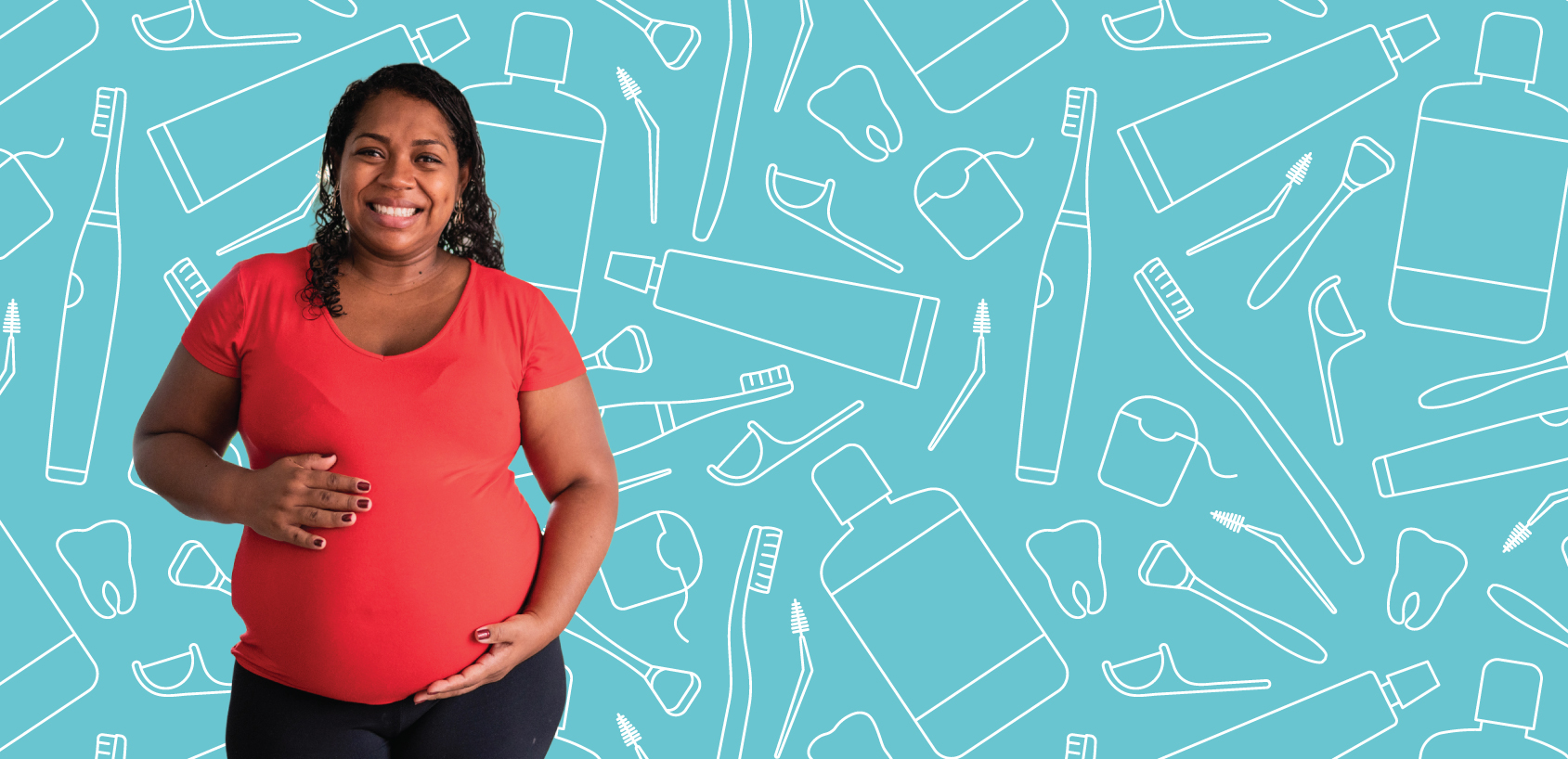
Good oral health is an important part of prenatal care, as the health of a mother’s body becomes the health of her baby. Brushing, flossing, eating healthy foods, and getting dental health checkups and treatment will help keep you and your baby healthy.
Pregnant women experience hormonal changes during pregnancy and may make women more likely to have increased tooth decay and periodontal (gum) disease. Getting dental care while you are pregnant is safe and important during pregnancy. If you notice any changes in your mouth, see a dental health professional.
Many women experience nausea during pregnancy, especially during the first trimester:
- If you have the need to vomit, don’t brush your teeth immediately afterwards, as this can cause your teeth to lose some of the outer surface, called enamel.
- Instead, rinse your mouth with a half a teaspoon of baking soda in warm water and spit it out. The baking soda will prevent the stomach acid from dissolving your tooth enamel and may also help with any sensitivity.
Daily Oral Care
- Brushing Teeth: Brush twice a day, after breakfast and before bedtime for at least two minutes, with a small, soft toothbrush and a pea-sized amount of toothpaste. A small toothbrush may help to clean those hard-to-reach areas without aggravating your morning sickness.
- Flossing: Teeth should be flossed daily. Floss in between each tooth that touches another tooth. Gently glide the floss between the teeth and create a C shape with the floss to hug the tooth without injuring the gum. Raise the floss up slightly and form the C shape for the other tooth that touches.
Dental Health Visits
Maintain Regular Dental Visits
Don’t skip your routine dental checkups and cleanings. Now more than ever, professional dental cleanings are particularly important. Women with a lot of cavity-causing bacteria during and after pregnancy can pass the bacteria from their mouth to the mouth of their baby.
- Make sure to tell your dental professional you are pregnant.
- Care should be taken to limit or avoid nitrous oxide (laughing gas), some antibiotics, and some pain medications while you are pregnant.
- Your dental professional can take precautions when taking x-rays.
Healthy Eating Habits
Healthy Food Options
One of the easiest changes you can make to look after your oral health, and the health of your baby, is your diet. Eat healthy foods like fresh fruits, vegetables, whole-grain products, dairy products, lean meats, fish, eggs, and beans.
- Since snacking is more common during pregnancy, try to choose snacks that are low in sugar and starches (foods can lead to dental decay).
- For moms that experience nausea, avoid foods with higher fat content. Rich foods with high fat can increase stomach acid and may aggravate morning sickness.
- Ensure a calcium-rich diet. Calcium is needed to keep your teeth and bones strong. Additionally, your baby’s first teeth begin to develop about three months into pregnancy, so getting enough calcium is important for baby’s developing teeth, gums, and bones.
Limit Sugary Drinks and Food Items
Four grams is the same as one teaspoon of sugar. For example, an 8-ounce glass of apple juice with 24-26 grams of sugar has over six spoons of sugar.
- Cutting down on how often and how much sugar you consume can dramatically reduce your risk of tooth decay and is also beneficial for avoiding blood sugar spikes.
- Limit sweets like candy, cookies, crackers, or cake. Eating sweets or drinking sweetened beverages can lead to more dental decay.
- Drink water instead of juice, sugar sweetened drinks, or soda.
Go Fresh and Limit Processed, Pre-Packed Foods and Drinks
Sugar is often added to pre-packed food and drinks while they are being made or at the table. For example, there are hidden sources of added sugar in processed foods like ketchup, dried cranberries, salad dressing, and baked beans.
Instead, satisfy your sweet tooth with whole fruit.
Pregnancy Gingivitis and Periodontal Disease
Because of increased hormone levels, pregnant moms may have excessive sensitivity and tender gums that bleed easily, a condition called pregnancy gingivitis.
Pregnancy gingivitis is inflammation of the gums that happens due to an increase in estrogen and progesterone, which are needed to help the baby grow. When plaque along the gumline remains, it causes the gums to become red, swollen, and tender.
- Pregnancy gingivitis affects around 60-75% of pregnant women and commonly starts during the second month of pregnancy and lasts until birth.
- If left untreated gingivitis can lead to periodontitis which is linked to preterm delivery and low birth weight.
There may also be a link between gum disease and adverse pregnancy outcomes, such as a greater risk of pre-eclampsia, premature birth, and of giving birth to an underweight child. If you notice any signs of gum disease, see a dental health professional.
Importance of Vitamin D
Vitamin D supports bones and healthy teeth, by helping the body absorb and keep enough calcium and phosphorus. Vitamin D also plays a role in the immune system.
- Low levels of vitamin D in children are associated with higher cavity rates.
- Higher prenatal intakes of vitamin D may be associated with lower cavity risk in children and infants.
Natural Sources
- Natural sources of vitamin D include salmon, sardines, tuna, mackerel, shitake mushrooms, and hard-boiled eggs.
- Enriched foods are another way to increase the vitamin D in your diet. Look for foods fortified with vitamin D such as milk, cereal, orange juice, and yogurt.
Talk to your prenatal care provider about ensuring you get enough vitamin D to support your health, and your baby’s health, during pregnancy.

Pregnancy Resources
Discover pregnancy resources, support, and programs offered by the Florida Department of Health.