Suicide is preventable for all ages and groups. Growing up, transitioning through childhood to adulthood, youths can feel their mental health being negatively affected. Learning how to manage and cope with new experiences can lead to feelings of depression, hopelessness and even thoughts of suicide.
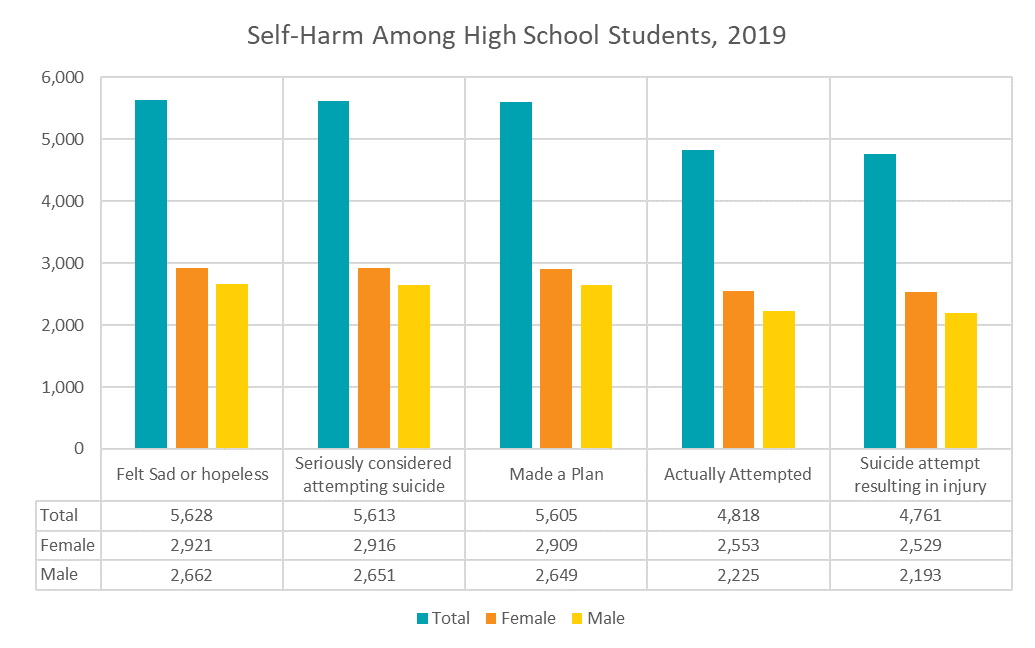
In 2019, according to a Youth Risk Behavior Survey, male and female high school students were asked questions regarding signs of being at risk for suicide.
- 24.2% of the male students and 43.4% of the female students reported feeling sad or hopeless
- 10.9% of the male students and 20.2% of the female students reported seriously considering dying by suicide
- 8.2% of the male students and 15.5% of the female students reported making a plan to die by suicide
- 6% of the male students and 9.6% of the female students reported actually attempting suicide
- 10.5% of the male students and 21% of the female students reported purposefully hurting themselves without wanting to die

988 Florida LifeLine
If you or someone you know is experiencing suicidal thoughts, substance use disorder, mental health crises, or any other kind of emotional distress, help is available. Call, text, or chat 988.

Signs and Risk Factors
Signs and Risk Factors
There are certain behaviors, ways youth express themselves or moods that they display, that can be symptoms of suicidal thoughts. At this age, adults may feel that these behaviors are typical of the teenage years but that is not always the case.
It is important to communicate with youth on how they are feeling and to be open with them about whatever they may be experiencing. Research shows that asking someone about it can lead them to get the help that they need. Some signs to watch out for include:
- Decrease in school performance or poor grades in school despite trying very hard
- Severe worry or anxiety, refusal to go to school, go to sleep or take part in activities that are normal for the child’s age
- Frequent physical complaints
- Extreme difficulties in concentrating that get in the way at school or at home
- Depression shown by sustained, prolonged negative mood and attitude, often accompanied by poor appetite, difficulty sleeping or thoughts of death
- Severe mood swings
- Strong worries or anxieties that get in the way of daily life, such as at school or socializing
- Repeated use of alcohol and/or drugs
Protective Factors
There are certain factors in all our lives that can act as buffers against circumstances that could harm our mental health. These are called protective factors and they can be found at different levels such as biological, psychological, family or community levels, that lowers the chances of negative mental health outcomes. The list below outlines examples of protective factors at each level.
Individual
- Positive physical development
- Academic achievement
- High self-esteem
- Emotional self-regulation
- Coping/problem-solving skills
- Connections in peer relationships, athletics, employment, religion, etc.
Family
- Family provides structure, limits, rules, monitoring, and predictability
- Supportive relationships with family members
- Clear expectations for behaviors and values
School and Community
- Mentors and support for development of skills and interest
- Opportunities for engagement within school and community
- Positive norms
- Clear expectations for behavior
- Physical and psychological safety
Resources for Assistance
If you are a parent or educator looking for help, there are resources available. Below you will find tools for how to cope with your mental health, where to find someone to talk to and more.
- Nemours Foundation provides information for parents, children, teens and educators on emotional and physical wellbeing as well as behavioral concerns.
- Mental Health Literacy offers information and resources for parents on different mental illnesses that may affect their teen.
- American Academy of Child and Adolescent Psychiatry and American Psychiatric Association resources are for parents whose children have been diagnosed with ADHD, Bipolar Disorder or Depression.
- National Alliance on Mental Health provides resources for family and caregivers on supporting their loved ones managing a mental illness, or experiencing a crisis.
- National Federation of Families provides resources on mental health to families and youth from a lived experience perspective.
- Jed Foundation provides mental health resources for parents on various mental health topics.
Tools for Suicide Prevention
- Jason Foundation brings awareness and educational curriculums centered around youth suicide prevention. Provides resources for parents, tools for educators as well as an app for youth.
- Society of Preventing Teen Suicide provides suicide prevention resources for parents.
- Suicide Prevention Resource Center offers information and resources for parents and teens on risks and warning for suicide.