
Integrated behavioral health care is the Florida Department of Health’s Title V Program’s approach to addressing access to quality behavioral health services, especially for children and youth with special health care needs. It is critical that children can access behavioral health care because:
Research shows that early screening and treatment of behavioral health concerns can improve a child’s outcomes. Unfortunately, we are experiencing a shortage of child and adolescent mental health providers. As a result, many families seek help from their primary care provider.
By implementing an integrative behavioral health care approach, medical providers, behavioral health providers and community organizations can work together to better meet children’s behavioral health needs.

50% of all lifetime cases of mental illness begin by age 14
The Title V program provides education and technical assistance to those who are interested in learning more about engaging in integrative behavioral health care.
The Florida Department of Health’s Title V program has collaborated with partners to develop a statewide behavioral health network, the Florida Pediatric Behavioral Health Collaborative.
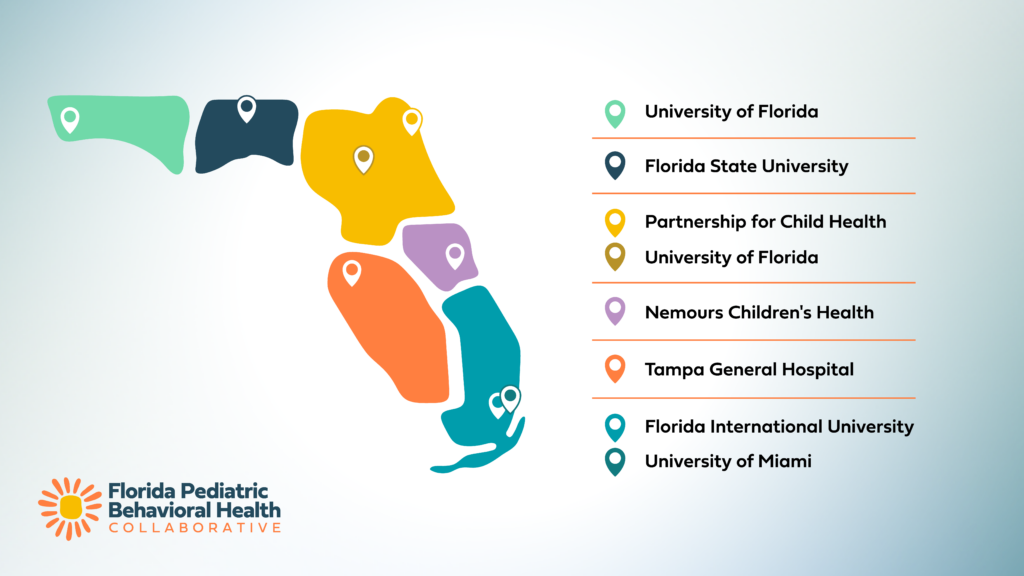
The collaborative increases access to pediatric behavioral health services by building the capacity of primary care pediatric providers through technical assistance, skills-building training, and tele-consultations. The collaborative is the organizing body for regional behavioral health hubs. Each regional hub has implemented an evidenced-based model of integrative behavioral health that best meets the community’s needs.
Behavioral Health Hubs work with local primary care pediatric providers to build their capacity in mental health diagnoses, treatment, and referrals. This work includes a needs assessment process, tailored skills building training, technical assistance, evidenced-based treatment, and telehealth consultations. Each hub establishes a referral network of local behavioral health providers to address the range of treatment needs a child or youth may have.
Service Delivery Models
Integrated Behavioral Health Care Service delivery models
Facilitated Referral Model
Primary care providers screen patients for behavioral health needs and work with professionals outside of their office to provide coordinated referrals and care.
Co-Located Model
Behavioral health and primary care professional’s offices are located in the same building or complex to reduce barriers to providing coordinated care.
In-House Model
Primary care providers and behavioral health professionals offer services as part of the same office workflow.
Collaborative Partners
- University of Florida’s Department of Psychiatry
- Florida State University’s College of Medicine Center for Behavioral Health Integration
- Nemours Children’s Health
- Tampa General Hospital
- Florida International University’s Herbert Wertheim College of Medicine Department of Psychiatry and Behavioral Health
- University of Miami’s Miller School of Medicine Department of Psychiatry and Behavioral Sciences
Behavioral Health Hub Resources
Templates
Standardized Surveys
- Training Satisfaction Survey
- Enrolled Provider Skills Assessment Tool
- Primary Care Provider Satisfaction Survey for Primary Care Provider:
English | Spanish
General Resources
- National Council for Behavioral Health’s Center of Excellence for Integrated Health Solutions
- American Academy of Child and Adolescent Psychiatry’s Pediatric Integrated Care Resource Center
- Florida Behavioral Health Collaborative Pediatric Psychiatry Consultation Hotline: 866-487-9507
- Florida Center for Behavioral Health Improvement and Solutions
The Florida Department of Health’s Children’s Medical Services and the University of Central Florida College of Medicine’s HealthARCH have partnered to engage health system organizations with one-on-one technical assistance to assist eligible pediatric and family medicine NCQA-recognized patient centered medical homes achieve an additional level of recognition, Distinction in Behavioral Health Integration (BHI). This NCQA distinction program provides eligible health systems with personalized assistance from HealthARCH to navigate the NCQA Distinction process.