
How to Mitigate When Radon Levels are too high in your home
Information for individuals who tested their home and have elevated radon levels—4 pCi/L or higher.






THe following Information covers
- Select a Florida certified radon mitigation professional to reduce the radon levels in your home
- Determine an appropriate radon reduction method
- Maintain your radon reduction system
RADON IS A CANCER-CAUSING, RADIOACTIVE GAS
It is colorless, odorless and tasteless. Radon is estimated to cause 21,000 lung cancer deaths each year.
Only smoking causes more lung cancer deaths. If you smoke and your home has high radon levels, your risk of lung cancer is especially high.
HOW RADON ENTERS YOUR HOME
- Radon is a naturally occurring, radioactive gas produced by the breakdown of uranium in soil, rock, and water.
- Air pressure inside your home is usually lower than pressure in the soil under your home’s foundation.
- Because of this pressure differential, your home acts like a vacuum, drawing radon in through foundation cracks and other openings.
WHAT DO YOUR RADON TEST RESULTS MEAN?
Any radon exposure has some risk of causing lung cancer. The lower the radon level in your home, the lower your family’s risk of lung cancer.
The U.S. Environmental Protection Agency recommends making safeguards to your home if the results of one long-term test or the average of two short-term tests show radon levels of 4 pCi/L or higher.
You can determine your radon levels by using a short-term test usually lasting from two to seven days or up to 90 days, or a long-term test from 90 days to a year. Radon tests should be conducted for a minimum of 48 hours, but longer tests give a better estimate of exposure.
WHY HIRE A CERTIFIED MITIGATOR?
Florida requires any paid mitigation professional to be certified to fix radon problems.
Mitigation professionals are certified for knowledge, skills and abilities in delivering professional radon services.
HOW TO SELECT A CERTIFIED MITIGATOR
Choose a certified mitigator to fix a radon problem just as you would choose any other professional to do other home repairs.
It is wise to get more than one estimate, to ask for their warranty and guarantee that they will reduce the radon to an acceptable level, to ask for references, and to contact some of those references to ask if they are satisfied with the mitigator’s work.
Compare the mitigator’s proposed costs and consider what you get for your money. Consider:
- A less expensive system may cost more to operate and maintain;
- A less expensive system may have less aesthetic appeal;
- A more expensive system may be best for your home; and,
- The quality of the building materials will affect how long the system lasts.
THE CONTRACT
Ask the mitigator to prepare a contract before any work starts. Read the contract before you sign it. Make sure everything in the contract matches the original proposal. The contract should describe exactly what work will be done prior to and during the installation of the system, what the system consists of, and how the system will operate.
WHAT TO LOOK FOR IN A RADON REDUCTION SYSTEM
In selecting a radon reduction method for your home, you and your mitigator should consider: how high your initial radon level is, the costs of installation and system operation, your home size, and your foundation type. The system must be labeled and have a visual or audible alarm, to let you know it is working. Exhaust fans must never be in or below the living space or vent into the living space or attic.
RADON REDUCTION TECHNIQUES
Some radon reduction techniques prevent radon from entering your home while others reduce radon levels after it has entered. The EPA generally recommends methods that prevent the entry of radon. However, each home requires a unique mitigation system specifically designed for that building.
Home Foundation Types
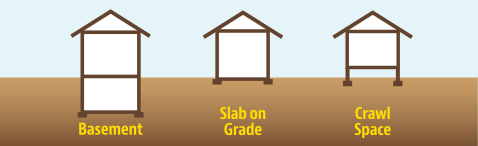
Homes have different types of foundations. Some have a combination of foundation types. Foundation type will determine the type of mitigation system installed. Foundation types include: Basement, slab-on-grade and crawlspace.
Basement and Slab-on-Grade Homes
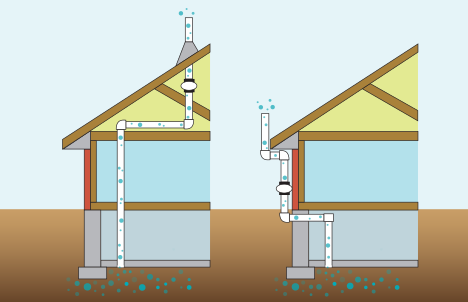
Active sub-slab suction—also called sub-slab depressurization—is the most common and usually most reliable radon reduction method.
Passive sub-slab depressurization is the same as active sub-slab suction except it relies on natural pressure differentials and air currents and is usually associated with radon resistant features installed using radon resistant new construction techniques.
Drain tiles or perforated pipes are used to direct water away from the foundation of the home and suction on these tiles or pipes is often effective in reducing radon levels.
Block-wall suction can be used in homes with hollow block foundation walls. This method removes radon and depressurizes the block wall.
Crawlspace Homes
Submembrane suction, when properly applied, is the most effective way to reduce radon levels in homes with crawlspaces.
Other Types of Radon Reduction Methods
Sealing cracks and other openings in the foundation is a basic part of most approaches to radon reduction.
Mechanical ventilation uses a fan to blow air into the living area from outdoors, which dilutes the concentration of radon in the home and pressurizes the building.
A heat recovery ventilator (HRV), also called an air-to-air heat exchanger, can be installed to increase ventilation.
Some natural ventilation occurs in all homes. By opening windows, doors and vents, you can increase the ventilation in your home.
CHECKING YOUR MITIGATOR’S WORK
The exhaust pipes of soil suction systems must vent above the surface of the roof, 10 feet or more above the ground and at least 10 feet away from windows, doors or other openings that could allow radon to reenter the home.
The exhaust fan must not be in or below a livable area and not in the attic because a puncture or leak in the pipe above the fan will cause high amounts of radon to be blown into the house.
If installing an exhaust fan outside, the contractor must install a fan that meets local building codes for exterior use.
Electrical connections of all active radon reduction systems must be installed according to local electrical codes.
A warning device must be installed to alert you if an active system stops working properly. The system must be labeled as a radon mitigation system with information on the certified radon business that installed the system.
Note that this indicator will not tell you if the radon level rises, just if the mechanical parts of the mitigation system fail.
A post-mitigation radon test should be done within 30 days of system installation but not sooner than 24 hours after your system is in operation with the fan on if it has one.
Make sure your contractor completely explains your radon reduction system, demonstrates how it operates, explains how to determine if it is not working, and describes how to maintain it.
LIVING IN A HOME WITH A RADON REDUCTION SYSTEM
Maintaining Your Radon Reduction System
It is recommended that homes with radon reduction systems be tested for radon at least every two years as changes to the building or the ground beneath it may cause large changes in the radon concentration.
Similar to a furnace or chimney, radon reduction systems need occasional maintenance.
Remodeling Your Home after Radon Levels Have Been Lowered
If you decide to make major structural changes to your home after you have had a radon reduction system installed, such as converting an unfinished basement area into living space, ask your certified radon mitigator whether these changes could void any warranties.
BUYING OR SELLING A HOME?
If you are buying or selling a home and need to make decisions about radon, consult EPA’s “Home Buyer’s and Seller’s Guide to Radon.” If you are selling a home that has a radon reduction system, inform potential buyers and supply them with information about your system’s operation and maintenance.
Florida Statute 475.278 (3)(a)9 states that the duties of a real estate licensee owed to a buyer or seller who engages the real estate licensee as a single agent include disclosing all known facts that materially affect the value of residential real property and are not readily observable to the buyer. This would include a known elevated radon concentration.