Many people do not know about radon or underestimate the risk. Educational materials empower individuals and communities with knowledge to take action.
Educational Resources
U.S. Environmental Protection Agency offers a variety of educational materials for various audiences, including health care providers, families, and children.
American Lung Association provides resources for a general audience, school, health care organizations, and others to promote awareness of the hazards caused by radon exposure.
Audio PSA:
Printable Materials
Resources are ready to download and share to promote awareness:


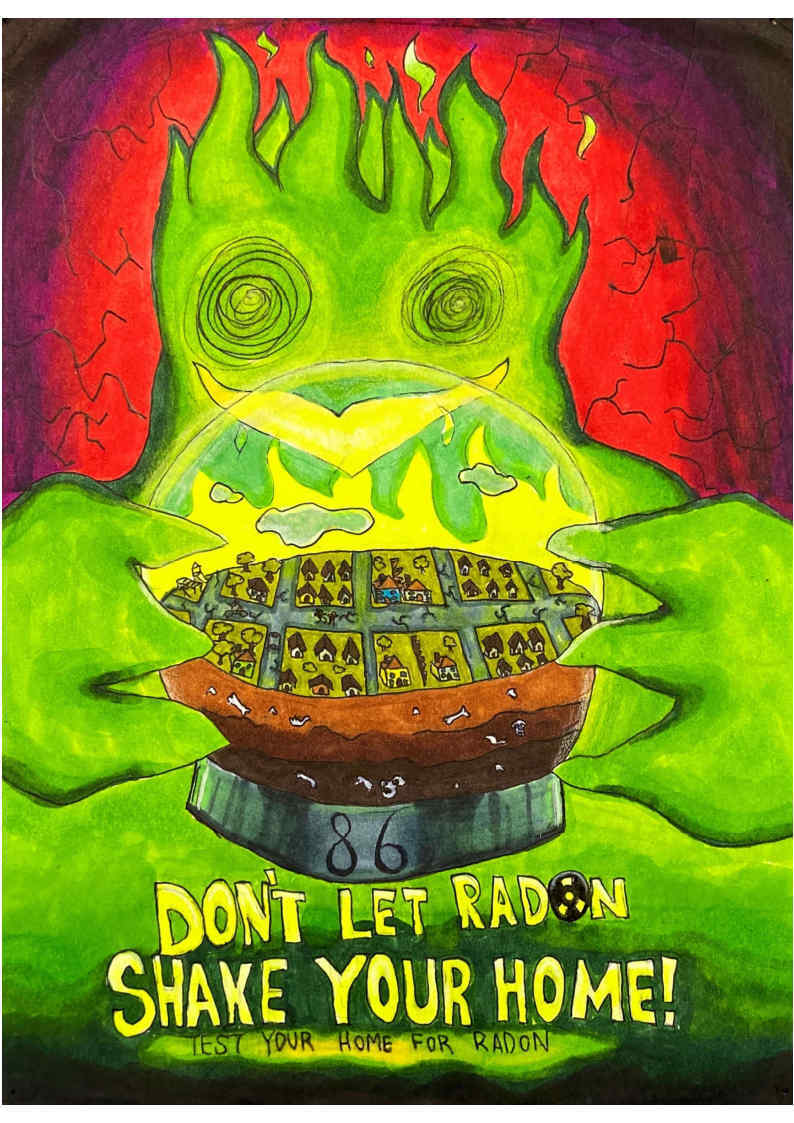
Poster/Video Contest for Kids
Florida participates in the national radon poster and video contests. If selected, winning submission will be distributed nationwide to promote radon awareness and testing during National Radon Action Month in January and throughout the year.

National Radon Action Month
January highlights the importance of individuals, groups, and organizations concerned about healthy people, homes, and communities are the driving force in getting the message out to the public about the dangers of indoor radon.
Resources by Audience
Health Care Providers
Lung cancer’s very high associated mortality rate is even more tragic because a significant portion of lung cancer is preventable. While smoking remains the number one cause of lung cancer, radon presents a significant second risk factor. That is why, in addition to encouraging patients to stop smoking, it is important for health care providers to encourage patients to test for radon levels in their homes.
Health care providers can play a vital role in informing the public about the common and serious risk of radon, and in educating their patients in testing procedures and remediation methods for correcting elevated indoor radon levels, and helping to reduce the number of lung cancer deaths.
American Cancer Society
Information about the health impacts of radon exposure and the risk of associated lung cancer.
Guide for Health Care Providers
Radon Leaders, an online learning and action network supporting the Saving Lives Campaign.
U.S. Centers for Disease Control and Prevention
Clinician overview and instructional video is designed to increase awareness among health care professionals about radon and its health effects.
Research and Academia
Los Alamos National Laboratory
Periodic table of the elements with information on the atomic and chemical characteristics of radon gas.
Health Physics Society
Scientific organization of professionals who specialize in radiation safety.
U.S. Geological Survey
Collected soil and radon data to develop a radon zone potential map and has published a document on the geology of radon.