
Carbon monoxide (CO) is an odorless, colorless gas that kills without warning. It claims the lives of hundreds of people every year and makes thousands more ill. Many household items including gas and oil-burning furnaces, portable generators, and charcoal grills produce this poison gas.
If you suspect you are experiencing any symptoms of CO poisoning, open doors and windows, turn off gas appliances, and go outside!
In cases of severe CO poisoning, call 911 emergency services or call the Florida Poison Information Center at 800-222-1222.

Poisoning Prevention
Install Carbon monoxide Detectors & Alarms
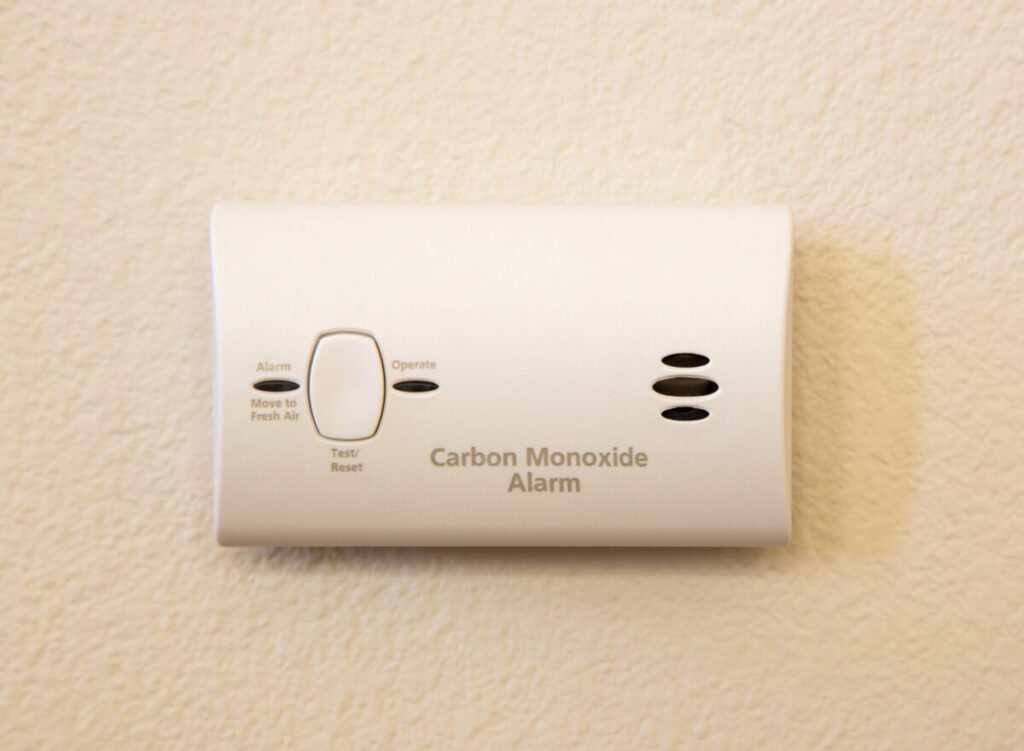
- Install battery-operated or battery back-up CO detectors near every sleeping area in your home.
- Check CO detector batteries when you change the time on your clocks each spring and fall to be sure they are functioning properly.
- Replace your CO detector following the manufacturer’s instructions or every 5 years.
- Be sure all appliances are properly installed and used according to the manufacturer’s instructions.
- Have fireplace, combustion heating, and ventilation systems, including chimneys, flues, and vents, professionally inspected every year.
- Do not burn charcoal inside a house, garage, vehicle, tent or fireplace.
- Always use generators outside, more than 20 feet away from home, doors, and windows.
- Do not use unvented combustion heaters in enclosed spaces, especially sleeping areas.
- Never leave an automobile running in a closed garage or in a garage attached to the house – even with the garage door open.
- While driving, keep the rear window or tailgate of a vehicle closed, as CO from the exhaust can be pulled inside.

Additional Prevention Resources
CO Poisoning Surveillance and Investigation
CO poisoning is a reportable condition in Florida. Physicians and laboratories are required to contact the local county health department or the Florida Department of Health at 850-245-4401 to report a suspected case of CO poisoning. Florida Department of Health has standard case definition and surveillance and investigation guidance for CO poisoning.
CO Poisoning data is available at Environmental Public Health Tracking and Florida Morbidity Statistics Report.